





Eye For Film >> Movies >> Perfect Blue (1998) Film Review
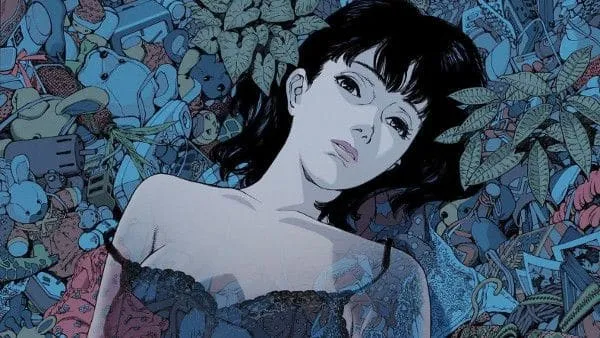

Before his untimely death in 2010, Satoshi Kon directed some of the most striking pieces of anime: Perfect Blue (1997), Millennium Actress (2001), Tokyo Godfathers (2003), and Paprika (2006), the film Inception ripped off. Of the four Tokyo Godfathers (the title refers to the old John Wayne western) is the outlier, a redemptive Christmas movie that comments on Japanese family structure. The other three are all in their own way concerned with the boundary between the real and imagined world, and the collective cultural imagination as experienced through film and television.
From the Art Deco font of its title, Perfect Blue wears its noir affectations on its sleave. It has one foot firmly planted in American erotic thrillers like Single White Female or Basic Instinct. The other is in ankle deep in Giallo. Bava's ambiguous reality from The Girl Who Knew Too Much and the serial killer archetype that started in Blood And Black Lace both echo here.
Mima Kirigoe (Junko Iwao) is a minor celebrity, a singer in the J-pop band CHAM!. During her final gig with the band she announces her departure. She is leaving to pursue a career in acting. As she does this, there is a disturbance in the crowd involving a tall, black-clad man with a deformed face (you know the horror films). Mima lands a bit part in the TV crime thriller Double Bind. Before filming her first and only line her agent, Tadokoro (Shinpachi Tsuji), is injured by a letterbomb meant for her. Later she discovers a chatroom dedicated to her (Perfect Blue is set back in the days of BBS, IRC and Usenet). One of its users is a stalker. Against the wishes of her other agent, Rumi (Rica Matsumoto), Tadokoro wants Mima to do a rape scene. It will boost the show's ratings and her profile. Jodie Foster in The Accused is directly referenced. As an act of duty, Mima agrees to do it.
The narrative is presented in a cut up style. Mima sees herself, her former self, in every reflection. The trauma of doing the rape scene, the stalker, and the exploitative nature of the business take their toll on Mima, fracturing her reality. Neither we the audience nor Mina know the boundary between what's real, imagined, or in the TV show. By the time the killings start she is beyond Gaslight, unsure of her own actions and memories, her own self.
With Perfect Blue, Kon takes the tropes of the thriller and twists them to the point of surreality. He also subverts them. In a thriller of the period, the rape scene and the later nude photo shoot would be presented as sensational, but here they are shown to be exploitative. Later, when Mima is attacked, her assailant's actions morph into those depicted in rape scene. The TV show Double Bind has led directly to sexual violence. In the finale, an American film would revel in vengeance, in violence. Instead Mima risks her own life to save her tormentor, then visits them in a psychiatric hospital. The ending is almost an inverse of Hitchcock's Psycho. And with the final line of the film the fourth wall is breached. Reflected through her car's rear view mirror, Mima addresses the audience: "No, I'm real!"
Perfect Blue, Millennium Actress and Paprika tell stories that could only be fully realised through animation. All three operate at a level of abstraction that could not be achieved by the photorealistic. Previously an animator, Satoshi Kon had an ability to produce films that were not only beautiful and stunningly inventive but could convey meaning in a way that is almost unrivalled in Anime.
Reviewed on: 10 Oct 2025


Read more Perfect Blue reviews:
| Angus Wolfe Murray |   |
Director: Satoshi Kon
Writer: Sadayuki Murai, based on the novel by Yoshikazu Takeuchi
Starring: Voices of Junko Iwao, Rika Matsumoto, Shinpachi Tsuji, Masaake Okura
Year: 1998
Runtime: 80 minutes
BBFC: 
Country: Japan
Festivals:
Search database: